 admin

Shadow Labyrinth takes Pac-Man into unfamiliar territory, recasting the iconic yellow character as PUCK, a robotic companion in a dark sci-fi action adventure. This hands-on preview of the 2D Metroidvania shows a game built around exploration, demanding combat, and an unusual story connected to the wider Namco universe. Its ideas have promise, although some platforming sections may test players’ patience.
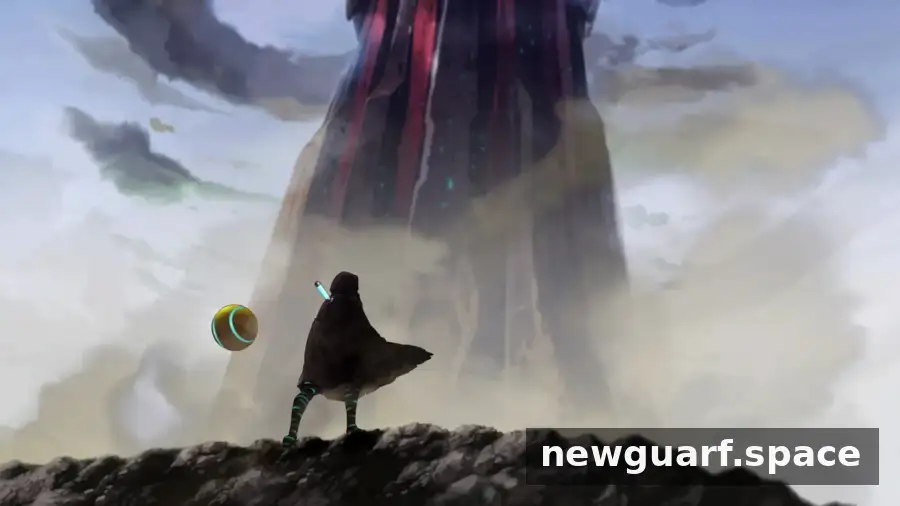
Shadow Labyrinth’s Story and Setting
The game’s backstory is introduced in PAC-MAN: Circle, the sixth episode of Amazon Prime’s video game anthology series Secret Level. The 11-minute episode follows PUCK, a sentient yellow machine orb sent by the United Galaxy Space Force (UGSF) to destroy a powerful AI. After the mission fails, PUCK is stranded on a world and seeks help from humanoid Swordsmen found in incubation tanks.
PAC-MAN: Circle focuses on PUCK and the seventh Swordsman it awakens. Shadow Labyrinth begins soon after, with players taking control of the eighth Swordsman. Watching the episode can provide useful context for the game’s unusual premise, though the preview presents the story through the perspective of the new protagonist.
Exploration, Combat, and ESP
The maze-like map rewards exploration, while new abilities open paths that were previously out of reach. A double jump, for example, helps the Swordsman access higher or more distant areas. The two protagonists have distinct roles: the Swordsman attacks with a sword and parries incoming strikes, while PUCK consumes the Ora currency dropped by defeated enemies. The familiar Pac-Man eating sound plays when PUCK collects it.
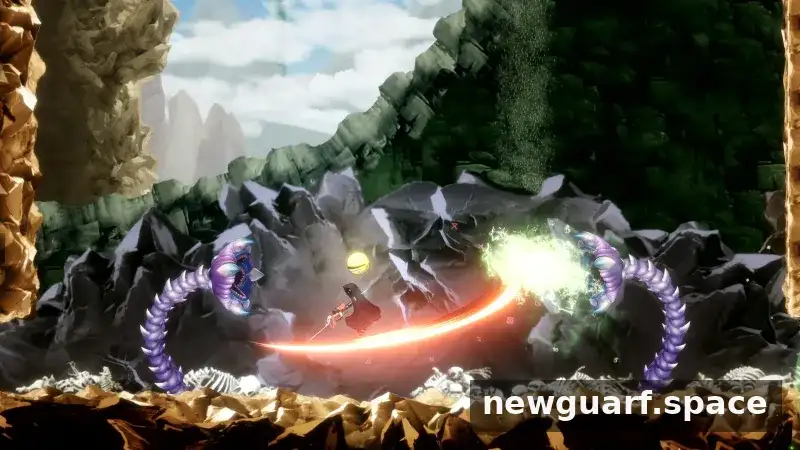
Combat is designed around movement as well as attacks. A dodge roll and mid-air dash help the Swordsman avoid danger, but both draw from the ESP meter. If ESP runs out, it takes time to recover, temporarily limiting evasive options. Special moves use the same resource, so players need to balance offense and defense, particularly during crowded fights.
ESP skills include a sweeping sword strike, firing PUCK forward like a projectile, and sending the orb around the Swordsman to electrify nearby enemies. Another ability launches explosive energy balls. These moves can be swapped through an ability wheel, giving players options for different encounters. A practical approach is to keep an eye on ESP before committing to repeated dodges or special attacks.
Perks, Checkpoints, and Upgrades
Perks provide passive improvements, such as making the Swordsman’s mid-air dash deal damage. Each Perk uses a number of Notches, represented by Pac-Man icons, and the preview begins with five. That limit makes choosing a combination important: for instance, three one-Notch Perks and one two-Notch Perk would use all five.
Perks can be changed at save checkpoints. These locations also allow fast travel between other saved points and let players spend Ora to improve basic stats, including attack damage. Before leaving a checkpoint, consider whether the selected Perks suit the areas or enemies ahead.
Difficulty and Namco References
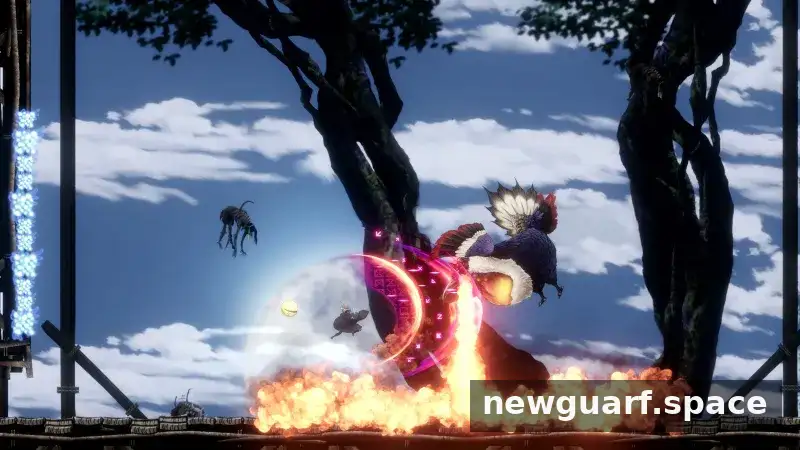
Fights can become tests of endurance, especially when healing items are limited and ESP management is essential. Players must combine parries, evasive movement, and counterattacks to handle tough duels and rooms filled with enemies. Once a meter is full, pressing both analog sticks transforms the protagonists into GAIA, a large mech suit that can quickly overwhelm opponents.
The setting also reworks elements from classic Namco games. The preview includes a planet inspired by the space shooter Bosconian and grotesque versions of enemies from Dig Dug. One boss wears the Terror Mask from Splatterhouse, turning a recognizable reference into a challenging fight. After defeating this enemy, PUCK takes over the Swordsman’s body and transforms it into a large, dark form that devours the defeated foe.
Pac-Man Platforming Sections
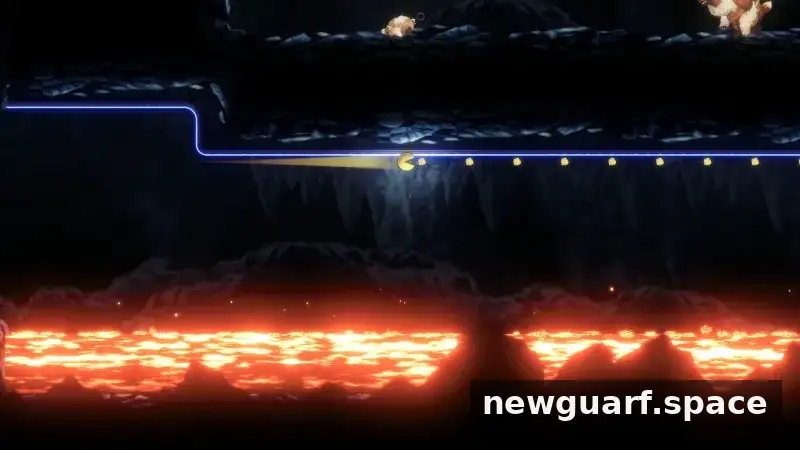
Some sequences put PUCK alone on tracks inspired by the original Pac-Man maze. PUCK moves continuously, and players steer its direction and jump between platforms. The concept makes good use of the character’s familiar movement, but controlling momentum can make jumps difficult to judge.
Buzzsaws patrol some of these routes, and avoiding them can be particularly awkward in narrow spaces or on vertical tracks. A timed section adds pressure by requiring players to reach a door before it closes, even though careful movement is needed to avoid losing health. Dying means repeating the section. In the preview, this was the most frustrating sequence, so players may want to prioritize controlled movement over speed when the layout allows it.
Early Impression of Shadow Labyrinth
Shadow Labyrinth’s core systems are competently assembled, but the preview does not suggest that its action or exploration will immediately stand out to every Metroidvania fan. The art style may also be divisive. Its strongest hook is the strange sci-fi premise, paired with reworked references to Namco’s history and a story that continues the events of PAC-MAN: Circle.
Overall, Shadow Labyrinth offers a distinctive take on Pac-Man, with flexible combat abilities, upgrade choices, and a maze-like world to explore. The preview’s platforming frustrations leave questions about how consistently its ideas work across the full adventure. For players interested in the series’ unexpected shift into dark sci-fi, Shadow Labyrinth’s story and world are the main reasons to keep watching its development.
