 admin

End of Abyss takes familiar ideas from the Metroid formula and presents them in an isometric world. In a hands-on preview, its maze-like map, areas that require new abilities, and information-rich scanner stood out as promising foundations for exploration. The result may appeal to players who enjoy piecing together a world as much as they enjoy challenging combat.
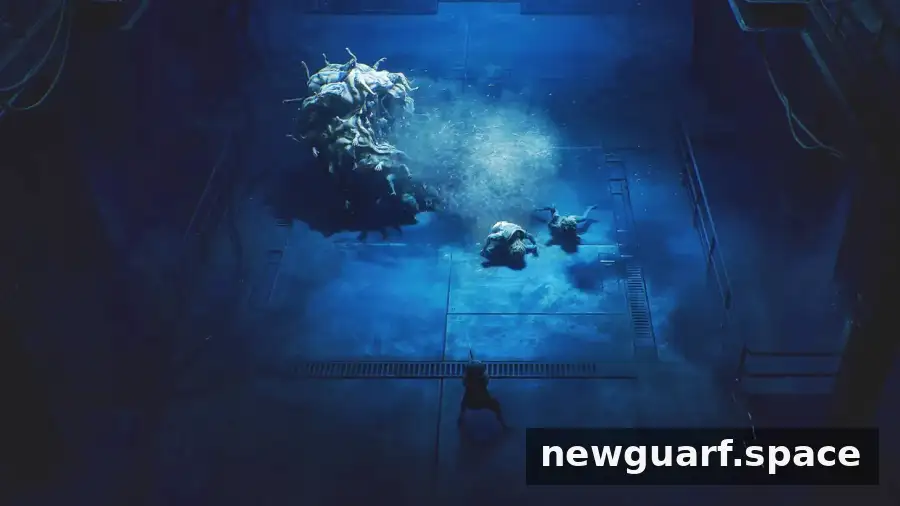
How End of Abyss reworks Metroid-style exploration
End of Abyss features a connected labyrinth with routes that are gated by abilities. This structure encourages players to remember places they could not reach earlier and revisit them when they have the right tools. It is a familiar approach for fans of Metroid-style adventures, but the isometric presentation gives the world a different perspective.
The comparison to Tunic is useful for understanding that presentation: both games bring a top-down action-adventure sensibility into an isometric space. End of Abyss, however, draws more directly on Metroid’s exploration and progression ideas. Its appeal will depend in part on how clearly players can read the environment and understand which paths are available to them.
The scanner makes the world easier to investigate
One of the clearest influences is the scanner, which recalls the tool in Metroid Prime. Players can scan objects around them to learn more about enemies, weapons, and unusual details such as cracks in walls. Rather than relying only on what is immediately visible, the game gives players a way to examine parts of the environment more closely.
The scanner may also help when progress becomes uncertain. A scan can reveal information that is easy to overlook during a first pass, offering clues about what deserves attention. It is worth checking unfamiliar objects and suspicious parts of the scenery, especially when the next route is not obvious. The scanner provides guidance, but the satisfaction still comes from interpreting the clues and deciding where to explore next.
Why the hands-on preview feels promising
End of Abyss combines several elements that work well together: a maze-like map, progression tied to abilities, combat, and a tool for examining the world. The scanner has the potential to make exploration feel more deliberate, while ability-gated areas give players reasons to keep track of locations they may want to revisit.
These are promising ingredients rather than a guarantee of how the finished game will come together. The balance between combat, discovery, and guidance will matter: players need enough information to make progress without losing the pleasure of finding their own way. Based on the hands-on preview, End of Abyss has an intriguing direction and a strong foundation for an exploration-focused adventure.
Conclusion
End of Abyss stands out for translating Metroid-inspired exploration into an isometric setting. Its ability-gated map encourages backtracking, and the scanner offers practical clues about enemies, weapons, and environmental details. For players interested in methodical exploration and challenging action, End of Abyss is a title worth watching as more details become available.
