admin
Order of the Sinking Star is the next major puzzle adventure from Jonathan Blow, the creator of Braid and The Witness. Revealed at The Game Awards 2025, the fantasy game is designed around thousands of puzzles, a large world to explore and mechanics that combine in unexpected ways. Blow describes it as the biggest game of his career.
What is Order of the Sinking Star?
The story follows a queen who escapes her kingdom during political upheaval, only to be captured and sentenced to execution. A mysterious event transports her to an unfamiliar realm filled with magic and puzzle-filled territories. The adventure is planned for PC the following year, and a console version has not been ruled out.
The project also grew out of Blow’s work on a programming language intended to make commercial game development more effective than using C++. He began developing the language, known unofficially as Jai, while completing The Witness. What started as a way to test the technology gradually became a full-scale game.
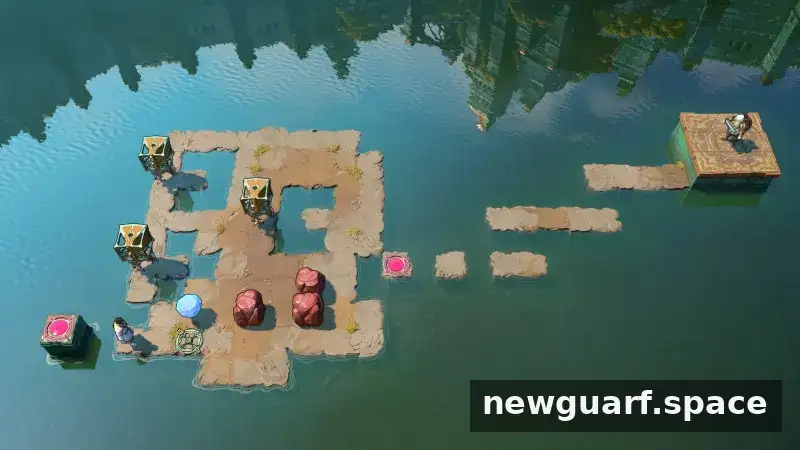
Four territories, each with its own puzzle rules
Unlike the first-person island exploration of The Witness, this game uses a top-down, third-person perspective and a grid-based world. Players can explore four biomes in any order. Blow describes them as separate game-like territories, each with its own characters, story and mechanics. The map begins mostly hidden by fog, so travelling through the overworld gradually reveals the surrounding land.
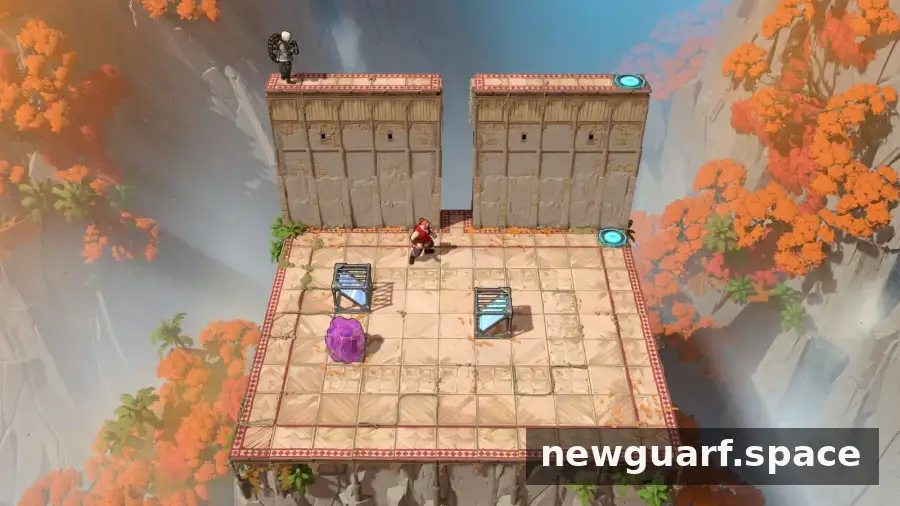
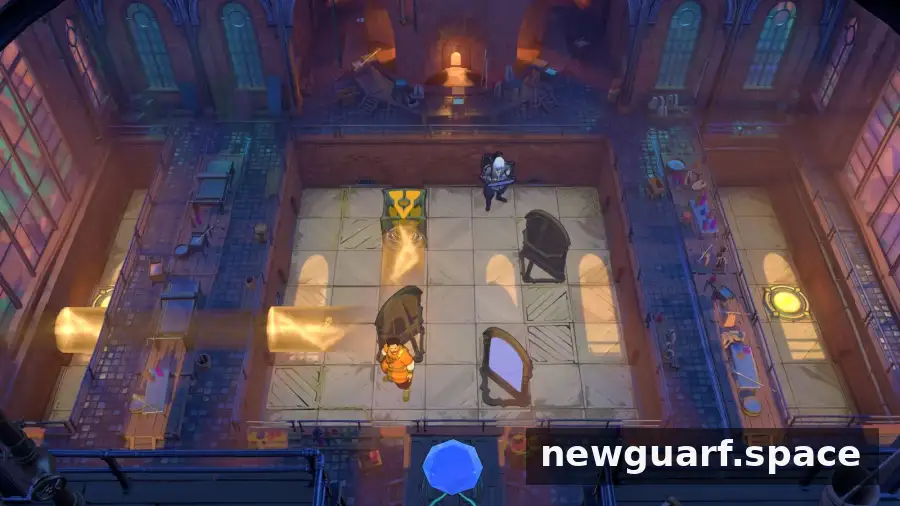
- Mirror Isles: A character can travel through mirrors, making their placement essential to crossing obstacles. Entering more than one mirror can also create duplicates.
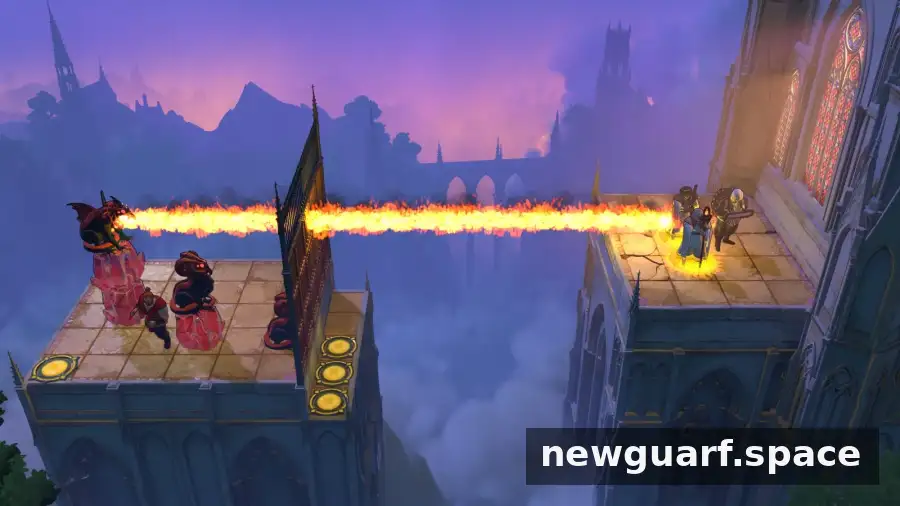
- The Promise: An adventurer in an exoskeleton can move giant gemstones and place them into sockets. The resulting colored laser beams grant different abilities: yellow beams allow the character to break objects, red beams bypass matching locked barriers, and green beams enable passage through walls. Intersecting beams can combine their powers.
- The Hearty Heroes of Hauling: This territory is one of the four regions, though the demonstration did not show its puzzles in detail.
The southern territory was also not shown during the demonstration. For players approaching a large puzzle adventure, exploring one region at a time may help make its rules easier to understand before moving on.
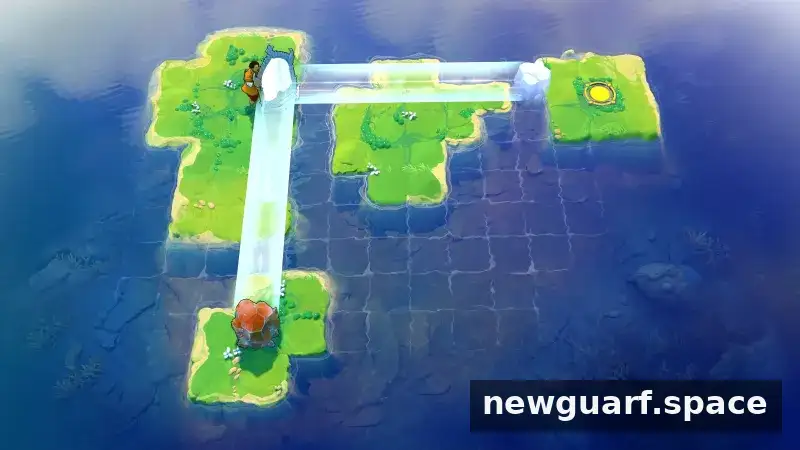
Characters bring different abilities to each puzzle
Individual levels introduce characters based on familiar role-playing archetypes. The Warrior can push large blocks. The Thief automatically pulls nearby objects when moving backward, so careless movement can leave her trapped. The Wizard switches places with movable objects within range. These actions happen automatically, making positioning important; players can undo a move or reset a level if they make a mistake.
Solving a set of puzzles in a territory gives the Queen access to that region’s ability in the overworld. For instance, completing enough challenges in the Mirror Isles lets her use mirrors to reach new areas. This creates a steady loop: learn a mechanic in a level, then use it to open up more of the world.
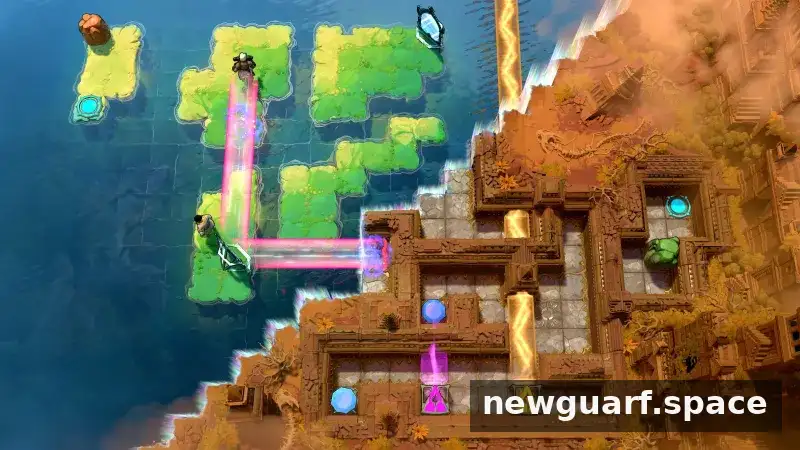
Worlds and mechanics combine into larger challenges
A central idea is bringing separate territories together. In the demonstration, part of the Mirror Isles borders the rocky landscape of The Promise. Characters from the two areas meet, and their abilities can be used together to solve challenges that neither character could handle alone.
Blow sees this combination of different puzzle systems as a way to keep expanding the game’s possibilities. Rather than ending once a single set of mechanics reaches its most complicated point, the game can introduce new challenges by mixing established rules with one another. For players, that means paying attention not only to the current puzzle, but also to how previously learned abilities might interact.
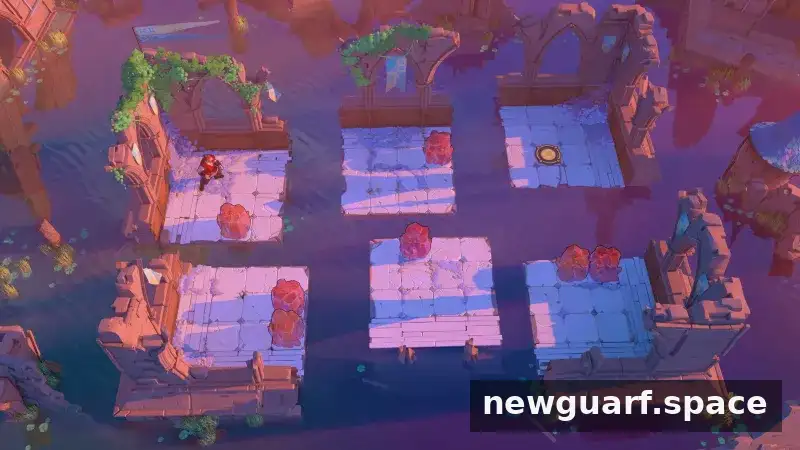
Optional puzzles, gold rooms and multiple endings
Players can find gold rooms throughout the four territories. Inside each, smaller challenges contribute to the completion of a larger golden star. Completing the relevant stars fills a meter and activates a teleporter. There are six teleporters in six gold rooms; activating at least four sends players toward the endgame.
The game contains thousands of puzzles, but not all are required to progress. Blow estimates that around 20 to 30 percent of the early puzzles can be skipped. Optional challenges become a larger part of the experience later, while the most demanding riddles are left for players who want to seek them out. If a puzzle becomes frustrating, exploring elsewhere may offer a useful change of pace.
The story is also non-linear: when players visit different locations can affect how the narrative unfolds. There are three endings, including a main conclusion and two that require solving additional mysteries. Blow says the endings are intended to feel satisfying rather than presenting a “bad” outcome.
Changing viewpoints and visual styles
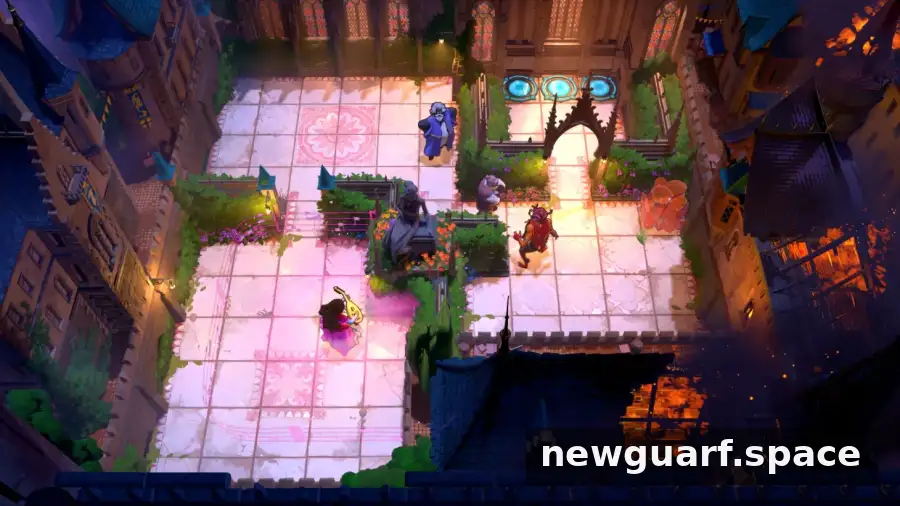
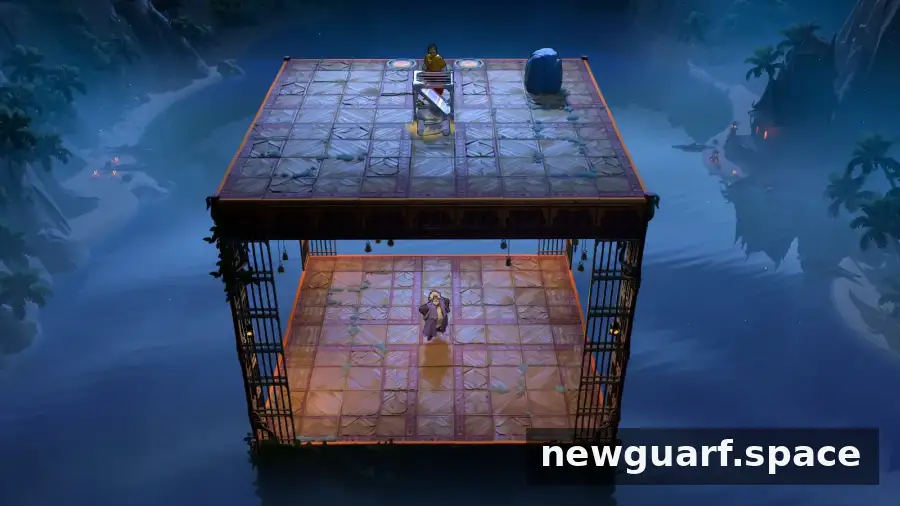
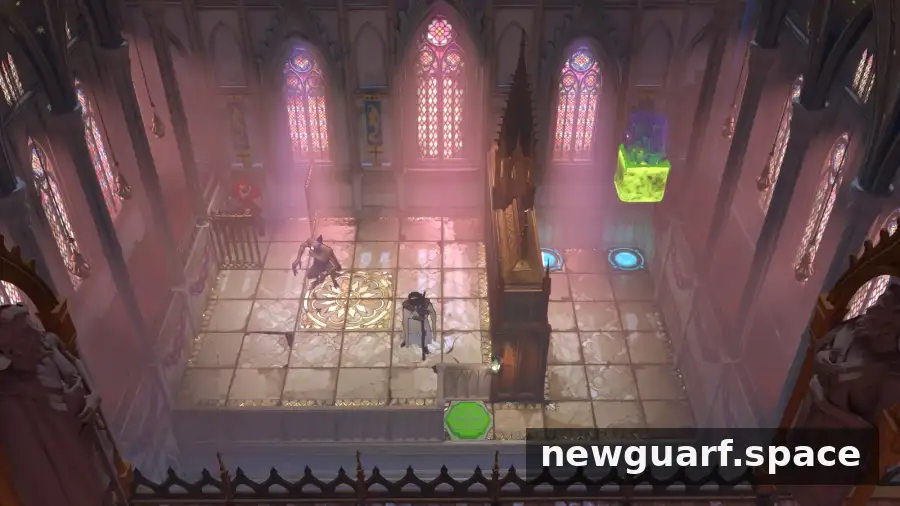
Some later levels shift to a 3D perspective, allowing puzzles to use height and depth as well as movement across a grid. The preview also included environments beyond the four initial territories, such as moss-covered underground ruins and a cathedral. These changes suggest that the game’s visual presentation and puzzle layouts will vary as the adventure progresses.
Its scale may appeal to players who enjoy taking their time with open-ended exploration. As in The Witness, the ability to leave a difficult puzzle and investigate another area can make a large collection of challenges feel more approachable. The game’s non-linear structure also lets players choose which mysteries to pursue first.
What to expect from Order of the Sinking Star
Order of the Sinking Star brings together distinct puzzle systems, a sprawling fantasy setting and thousands of challenges. Its defining feature is the way abilities and territories can interact, while optional puzzles and multiple routes give players room to set their own pace. The game is planned for PC the following year, with a console release still possible.