admin

Resonance: A Plague Tale Legacy takes the series in a new direction, shifting from the stealth-focused adventures of Amicia and Hugo to a sword-wielding prequel about Sophia. Set in 1333, fifteen years before the events of A Plague Tale: Requiem, the game follows the young smuggler on the Greek island of Crete. A hands-on preview of its fourth chapter suggests that action, exploration and ancient mythology will shape this new chapter of the series.
Resonance: A Plague Tale Legacy Gives Sophia the Spotlight
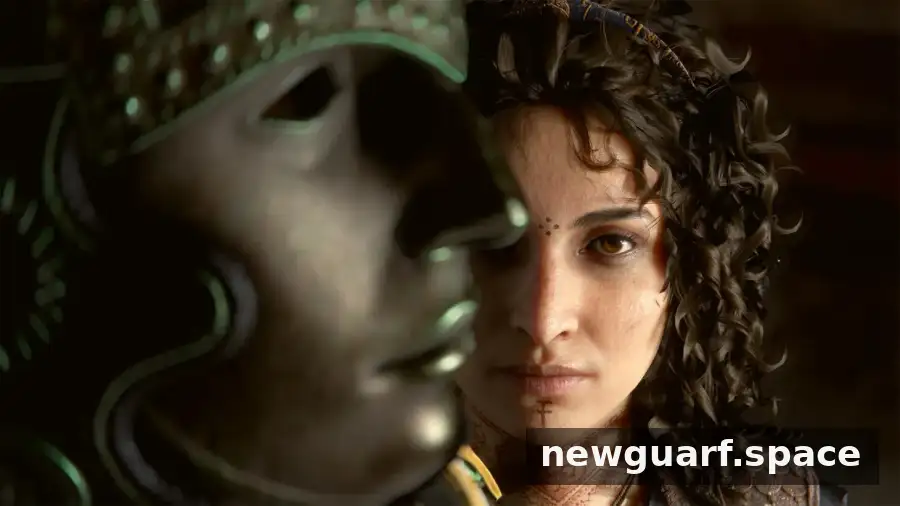
Sophia was a capable ally to Amicia and Hugo in Requiem, but her earlier life was mostly unexplored. The prequel uses that gap to build a story around how she became a skilled fighter and why, later in life, she says she no longer wants to kill. Creative director Eric Chort describes Sophia as a strong foundation for a different style of gameplay, while lead writer Carol-Ann Bañuls notes that the younger Sophia is less composed than the character players already know.
The developers wanted to expand the series without repeating the same emotionally heavy journey. They explored an action-adventure approach inspired by games such as Tomb Raider and Uncharted, while keeping the character-driven storytelling associated with A Plague Tale. Bañuls has also indicated that the story will still have darker moments, so the change in tone does not mean the series is leaving its emotional themes behind.
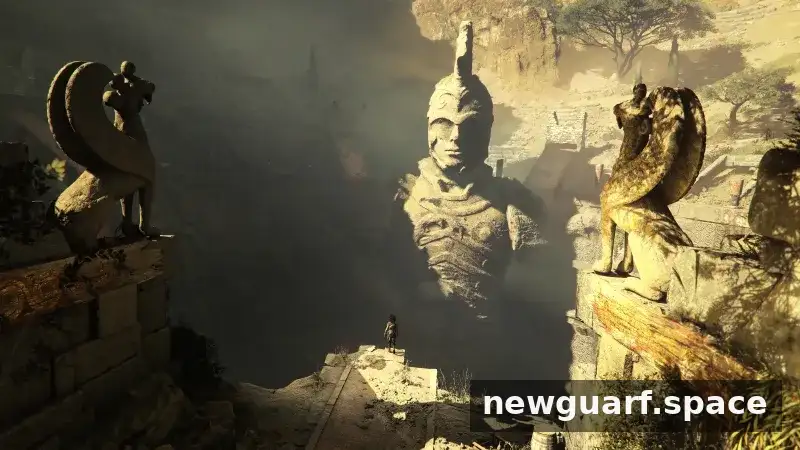
What to expect: Sophia’s adventure is set on a single island rather than in an open world. The developers describe its scope as closer to the previous Plague Tale games, with exploration and combat both playing substantial roles.
A More Direct, Sword-Based Combat System
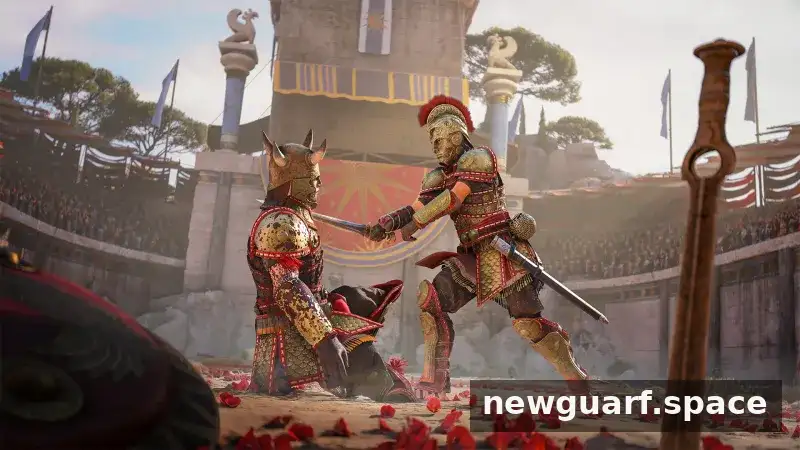
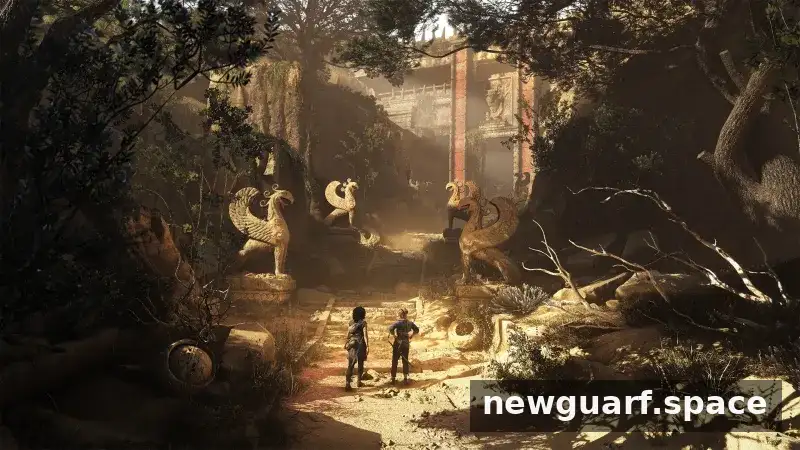
The preview begins with Sophia and her companion Leni trying to reach an ancient temple while Venetian soldiers close in. A failed attempt to swing across a gap with Sophia’s grappling hook sends her into a confrontation, demonstrating how the game can turn exploration into combat.
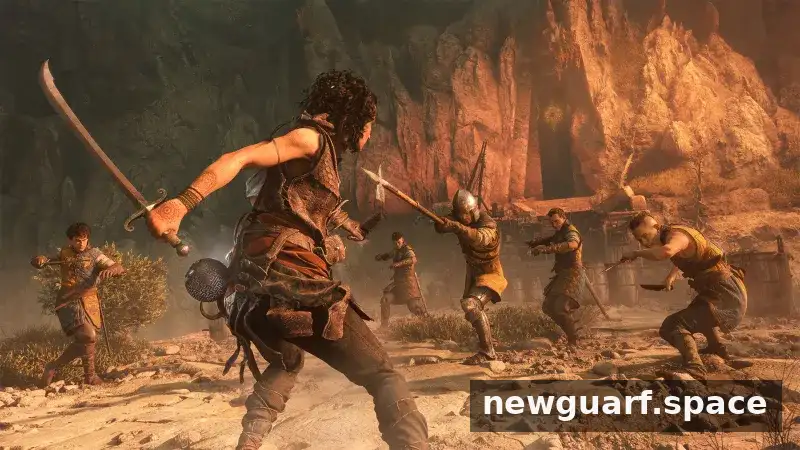
Sophia fights with a sword and dagger. Her basic attacks form three-hit combinations, while blocking, dodging and parrying provide ways to respond to enemy strikes. Landing three consecutive parries fills an enemy’s stagger meter, creating an opening to attack. A charged dagger strike can stun some opponents or finish off weakened enemies, and the grappling hook can bind and pull a target closer. Kicks can break an enemy’s guard or send them over a ledge.
Combat also uses the surrounding space. Enemies can collide with one another or be knocked into walls, disrupting groups. Context-sensitive finishing moves vary according to the positions of Sophia and her opponent. Companions, including Leni, can assist during some encounters.
Players can discover up to seven optional swords, each with a different perk. For example, the falchion increases damage after a critical strike, while the kopis adds stun damage to the final hit of a combo. These weapons can be missed during exploration, so checking side paths is useful for anyone who wants to find them.
Chort says the team studied a range of action games while developing the combat, including Marvel’s Spider-Man, the Batman: Arkham series, Sekiro: Shadows Die Twice and Sifu. Ghost of Tsushima became a particularly useful reference for group encounters, parries and grounded animation. The developers adapted those ideas to Sophia’s agility and fighting style.
Temple Puzzles and Exploration
Combat is only part of the chapter. Sophia’s journal records sketches and visual clues that can help players find a route forward. When a collapsed staircase blocks the way, for instance, an image in the journal points toward a tree and a nearby side path. Checking the journal can be a useful first step when an objective is unclear.
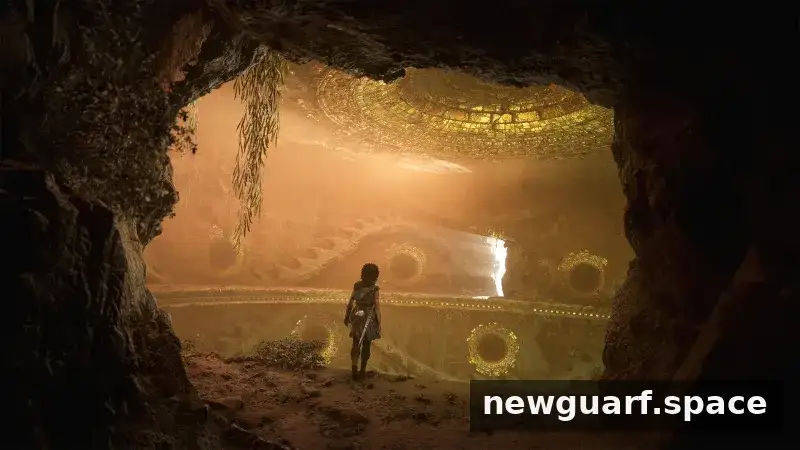
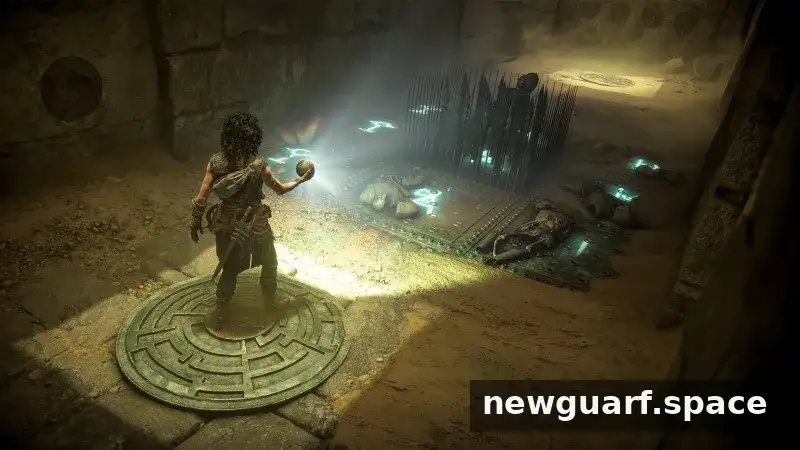
Inside the temple, environmental puzzles make use of a mysterious orb Sophia carries. Exposed to sunlight, it glows and reveals hidden markings. In one room, the markings identify which spiked floor plates are safe to cross. Another puzzle reveals a maze on the floor, whose paths lead to symbols connected to a door mechanism.
If a puzzle proves difficult, players can ask a companion for a hint using the up direction on the D-pad. The guidance begins broadly and becomes more specific with repeated requests. This offers a way to get help without immediately giving away every step.
Exploration can also reveal collectible relics and Resonance Points, which are used to unlock abilities in a skill tree. Fighting awards Resonance Points in larger amounts, though individual points can also be found while exploring. According to Chort, the game balances puzzle-solving and combat evenly, making it worthwhile to investigate optional spaces as well as follow the main route.
Theseus, the Minotaur and Sophia’s Past
One sequence shifts the player into a flashback set centuries earlier. Instead of Sophia, the playable character is Theseus, the Greek hero associated with defeating the Minotaur. The scene takes place among Minoan soldiers in a torch-lit chamber, where a ritual turns into a battle. After this section, Sophia gains access to a Focus Attack: a sweeping move activated by pressing two attack buttons once its meter is full.
The developers have kept the story significance of these visions under wraps. Bañuls describes the Minotaur as a symbol connected to violence, instinct and losing control, themes that relate to Sophia’s difficulty being vulnerable with others. The myth appears to be more than a setting detail, but its exact role in her journey remains a mystery.
The island also seems to hold secrets beyond the Greek legend. Unlike the earlier games, where rats and the Macula curse are central, the preview does not show the familiar rat swarms. Bañuls explains that the rats are associated with the plague affecting France in the previous games’ historical period, rather than the Minotaur myth. She hints that other unusual forces may be present on the island.
Why the Name Resonance Matters
The title refers both to the island’s mysterious call to Sophia and to the way past experiences continue to affect her. Bañuls has described resonance as something that can be heard in a place or felt within a person. That idea connects the setting to the character’s memories and unresolved history.
In this preview, Resonance: A Plague Tale Legacy stands out as a notable change of pace for the series. Its combination of sword combat, companion support, journal-based clues and temple puzzles gives Sophia a distinct gameplay identity. Players who enjoy focused third-person action-adventures may find its direction appealing, while the story’s links to Sophia’s past and the Minotaur myth offer a reason for longtime fans to follow her journey.