 admin

Tomb Raider: Legacy of Atlantis reimagines Lara Croft’s original 1996 adventure with updated visuals, platforming, puzzles, and action. A one-hour preview suggests the remake is aiming to preserve the series’ sense of exploration while modernizing its presentation and combat. The demo offers plenty to be optimistic about, though a few control and checkpoint issues could make parts of the experience frustrating.
Tomb Raider: Legacy of Atlantis brings a classic adventure back
Developed by Crystal Dynamics and Flying Wild Hog, the game uses Unreal Engine 5 to revisit the story that helped establish Lara Croft as a video game icon. Its Steam page also mentions the use of AI-assisted tools, though the extent of that use is not specified. That detail may matter to players who want more information about how the game is made.
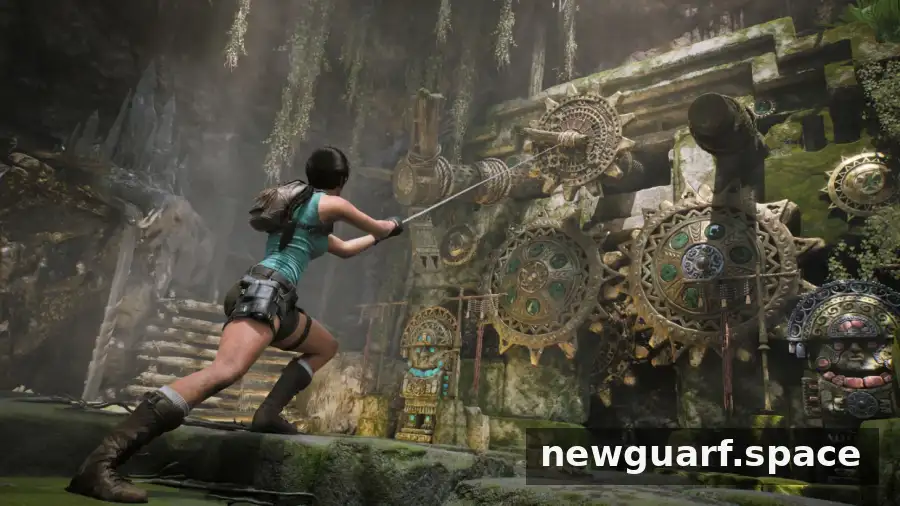
The demo opens as Lara steps out of a cave into a rainforest clearing dominated by a waterfall. Dense vegetation, wildlife, and ambient sound help establish the setting as the player explores the area. With little story context in the demo, the immediate objective is practical: repair a rope-and-pulley mechanism to stop the waterfall.
Exploring the water temple
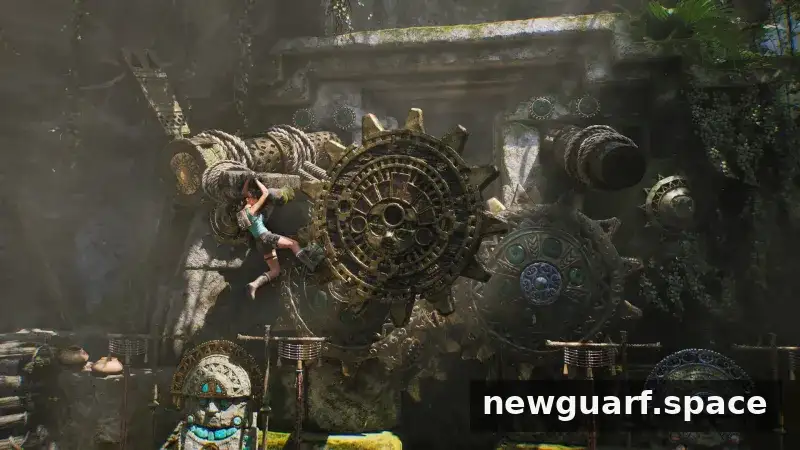
Repairing the mechanism requires three missing gears, hidden among the ruins of an ancient water temple. Finding them involves searching the structure and moving a few objects, but the route is generally clear. Players who enjoy environmental puzzles should take time to scan ledges and corners before moving on; small components can be easy to overlook among the ruins.
Platforming and rope swings need careful camera control
Climbing through the temple introduces a series of jumps above a fast-moving stream. Falling sends Lara back to the beginning of the section, creating a roughly 30-second return trip. That reset can feel repetitive after several attempts, so checking each landing area before committing to a jump may help avoid unnecessary backtracking.
The rope swing is satisfying when it works, especially across wider gaps, but its activation depends on both timing and camera direction. Lara must jump from a ledge and press the top face button while airborne. The prompt may not appear unless the camera is aimed directly at the grapple point, sometimes requiring an awkward adjustment in mid-jump. Clearer prompting or more forgiving camera detection could make this move easier to use.
Combat builds toward a dramatic dinosaur chase
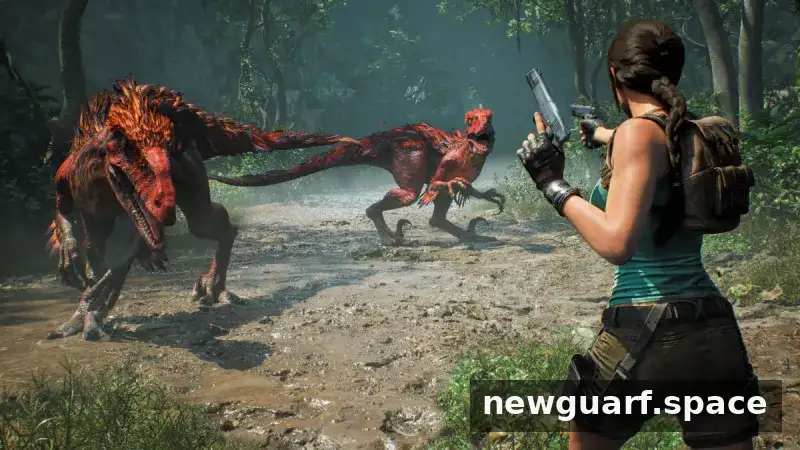
After Lara reaches the top of the temple and solves the final puzzle, the demo shifts into an action sequence. Velociraptors corner her in a forested arena, giving players a chance to use her dual pistols. The shooting feels responsive, and a focus meter adds a tactical element to her acrobatic movement.
As Lara dives and rolls, the meter gradually fills. Once ready, it triggers a three-second slow-motion window that can make aiming easier. The encounter then escalates with the appearance of a T. Rex, whose attacks punish mistakes and turn the fight into a tense survival moment.
What the preview suggests
The final chase tests the skills introduced throughout the demo as Lara runs through a muddy ravine, crosses fallen trees, and makes a last leap to safety. The rope mechanic’s camera issue appears again, but the sequence still delivers a strong sense of danger and momentum.
Overall, Tomb Raider: Legacy of Atlantis shows promise as a modern take on Lara Croft’s first adventure. Its rainforest setting, temple exploration, and dinosaur encounters capture the series’ adventurous appeal. The most useful things to watch for in future previews are whether the developers improve rope-swing prompts and reduce the frustration of repeated platforming resets.
