admin
Hell is Us is an action-adventure game built around discovery rather than constant on-screen directions. Set in a fictional European country scarred by war and threatened by otherworldly creatures, it asks players to investigate their surroundings, question characters, and piece together what to do next. Its mix of exploration, puzzles, and melee combat may appeal to players who enjoy earning their discoveries instead of following a stream of map markers.
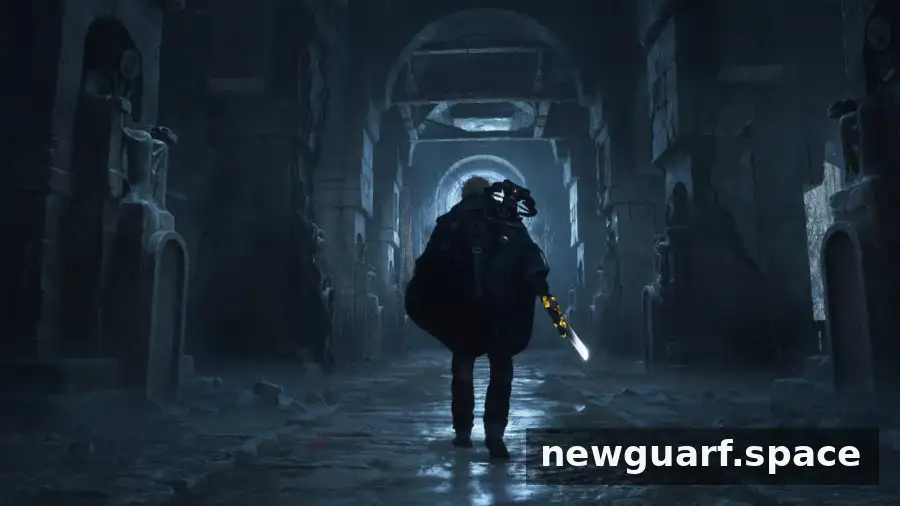
Hell is Us puts discovery in the player’s hands
Created by Montreal-based studio Rogue Factor, Hell is the studio’s debut game. Its creative and art director, Jonathan Jacques Belletête, previously worked at Ubisoft as art director on the Deus Ex franchise. The game follows Rémi, a soldier born in Hadea, a fictional nation cut off from the outside world and consumed by civil war.
Rémi’s parents smuggled him out of Hadea as a baby, and he grew up in Canada in foster homes. As an adult, he accepts a peacekeeping assignment in a neighboring country, then goes AWOL to return to his homeland and search for his family. The story takes place in 1993, after two years of civil war. Finding his parents is difficult enough; the presence of a mysterious, powerful threat makes the journey more dangerous.
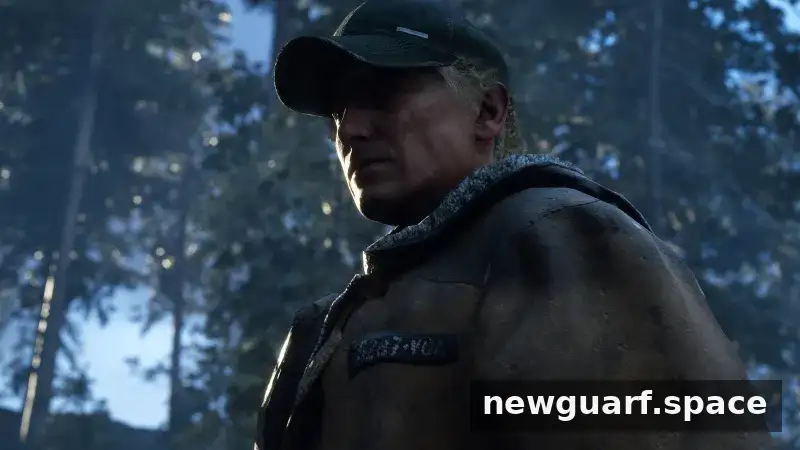
Information is scarce, so Rémi has to gather details from people, objects, and places. Rogue Factor draws inspiration from older adventure games that expected players to pay attention and solve problems without extensive guidance. Instead of relying on a constant arrow or a detailed quest journal, the game encourages observation and reasoning.
Belletête describes this design philosophy as trusting players to work things out for themselves. Environments are intended to offer useful clues, not just atmosphere. For players, that means slowing down, examining the scenery, and remembering what characters say can be as important as winning a fight.
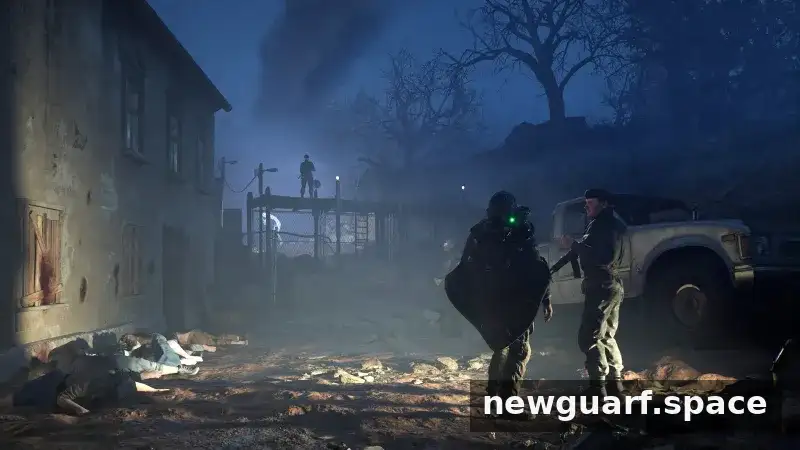
Investigations, clues, and puzzle-solving
The demo begins in Senedra Forest, one of several large open hubs. Hell is Us is not a fully open-world game, although its map presents numerous places to explore. There are no map markers or quest journal entries that spell out every objective. Rémi has a keepsake pointing toward a village called Jova, but must ask questions and follow clues to learn how to reach it.
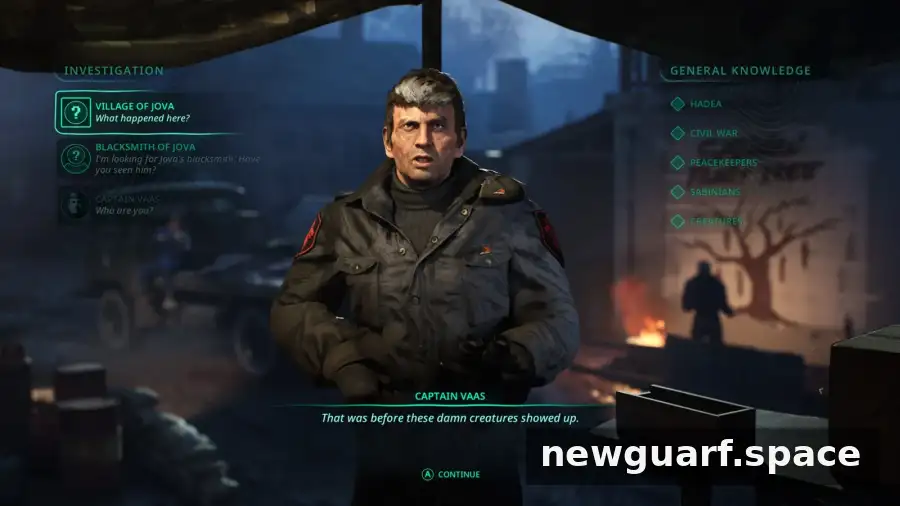
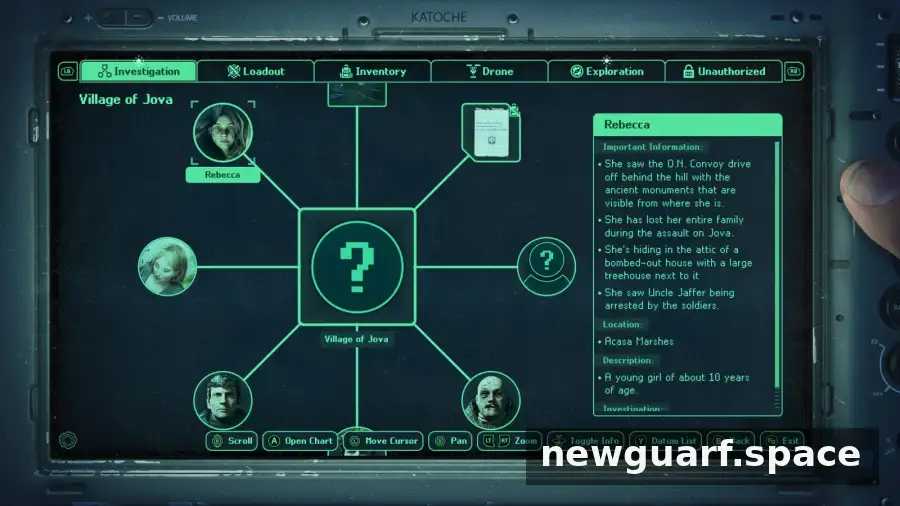
Conversations let players ask about specific investigations as well as broader topics, including Hadea and its civil war. An investigation flow chart records the people, objects, and events connected to each mystery. As new information comes to light, entries gain details such as a person’s location, description, and relevant facts. Check these records when a lead feels incomplete; a detail learned earlier may help make sense of a later discovery.
One early example involves Ernest Caddell, an elderly farmer. He explains that Jova is in Acasca Marshes, some distance away, and that Rémi will need a vehicle. Ernest says soldiers arrived in an armored personnel carrier (APC) and directs Rémi north, following wind chimes through the woods. The player must use Rémi’s compass and listen for the chimes rather than simply follow an icon.
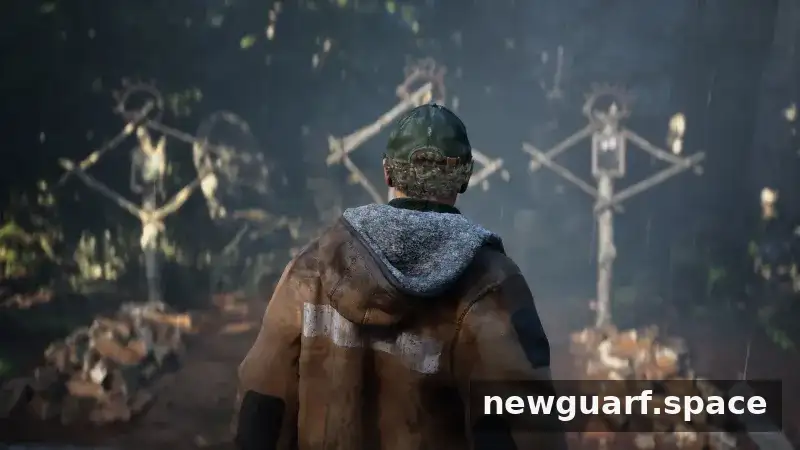
This navigation approach makes spoken directions useful. The chimes are close enough together to guide the way, but players still need to interpret Ernest’s instructions and pay attention to their surroundings. It is a small-scale example of how exploration works throughout Hadea.
The investigative structure also recalls point-and-click adventure games. Clues and key items can be recorded in the flow charts, and some can be placed on the hotkey item wheel for quick reference. Characters may need to be questioned about several subjects to reveal useful leads. Belletête cites Westwood Studios’ 1997 Blade Runner adventure game as an influence, while Rogue Factor has adapted that clue-following approach into a more streamlined format.
Exploration can also uncover special items that begin optional side quests called Good Deeds. A gold watch engraved with the name Otis, for instance, adds a lead to the log, but further information is needed to learn who Otis is and where to find him. Treat such discoveries as open questions: the item may be the start of a task, rather than its solution.
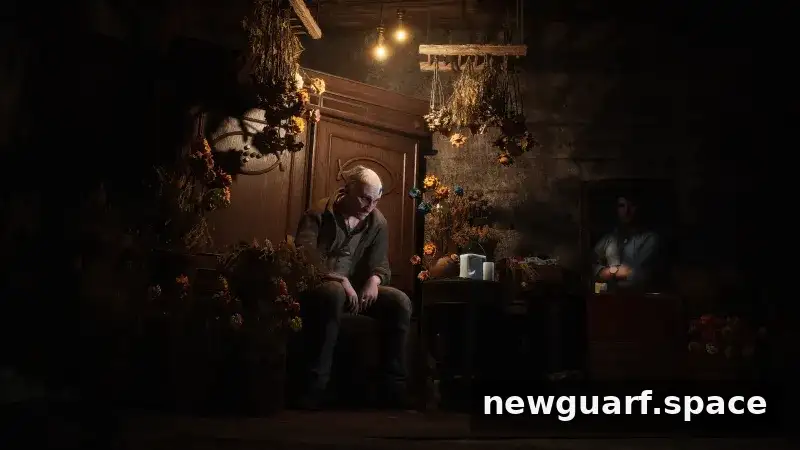
Puzzles range from small environmental challenges to more involved dungeon trials. One optional riddle uses a child’s message to guide players along a route marked by matching landmarks. Another puzzle requires rotating circular rings of symbols into the correct order. Carvings in the surrounding area provide subtle hints, rewarding players who inspect the environment before trying combinations at random.
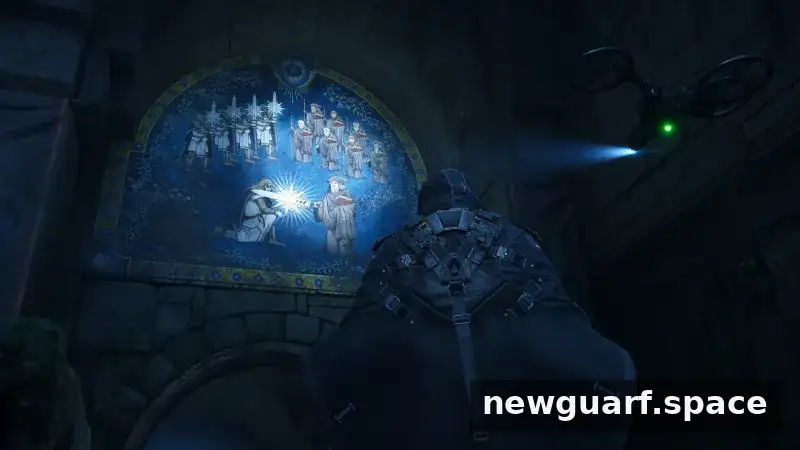
The main-story puzzles are designed to be manageable, although Belletête says two later challenges become particularly demanding. Optional riddles cover a wider range, from very easy to extremely difficult; the team’s internal labels include “Very Easy,” “Normal,” “Very Hard,” and “Reddit” for challenges that may prompt players to collaborate on a solution. Puzzle difficulty was still being refined during the preview, so the final balance may differ.
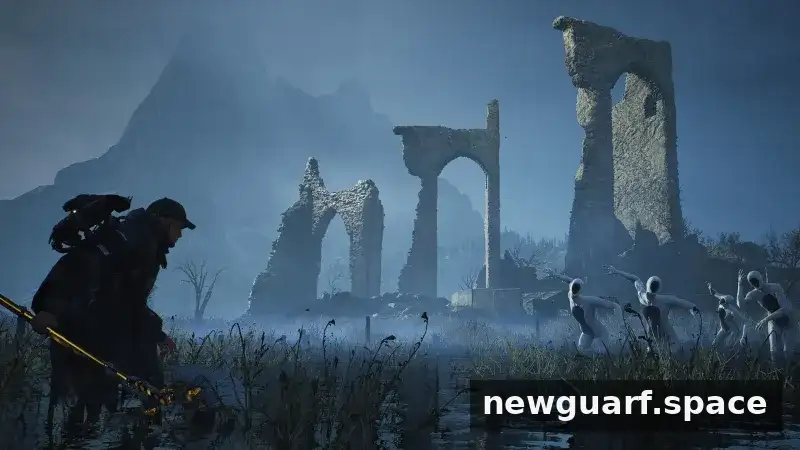
Dungeons include enemy encounters, keys, and both essential and optional items. Their ancient, distinctly nonhuman architecture contrasts with Hadea’s contemporary villages and countryside. Some are hidden across the map, and a few must be uncovered by solving a riddle. One dungeon’s dramatic appearance in a marsh changes the surrounding landscape, making careful exploration worthwhile.
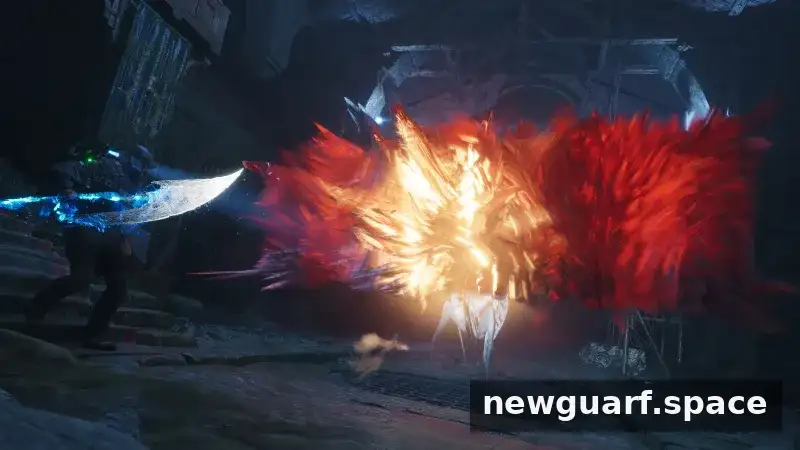
Combat is deliberate, with support from a drone
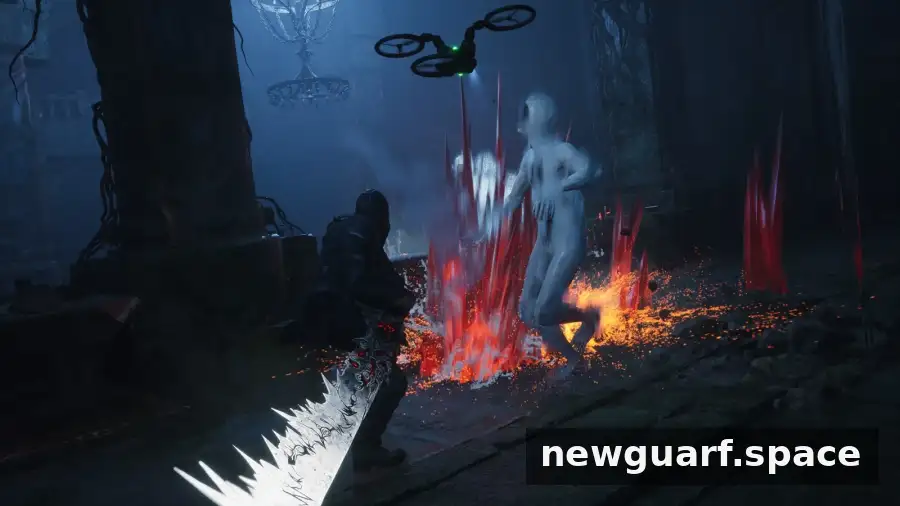
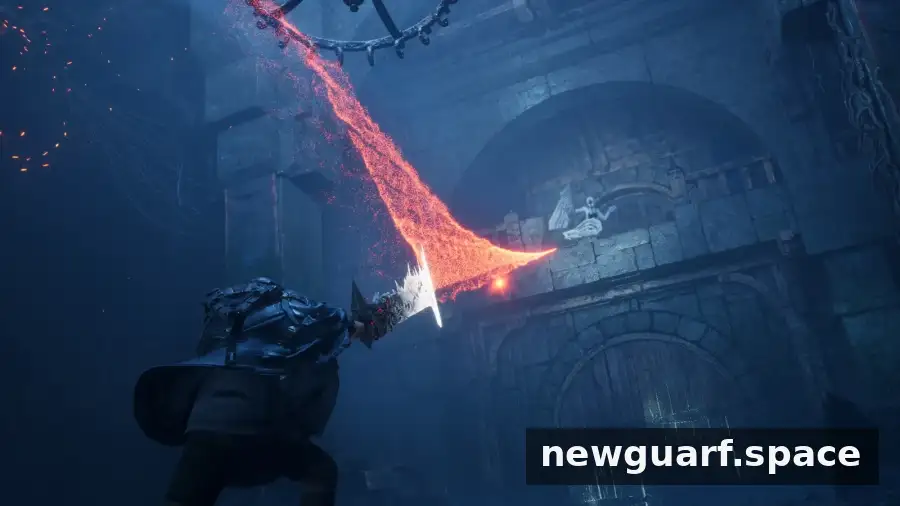
Belletête describes the experience as roughly split between exploration, including puzzles, and combat. Rémi fights with weapons such as a sword, polearm, and dual axes. Attacks commit him to animations, so timing matters; holding the attack button charges a stronger strike. Players can also dodge and parry, while a stamina meter governs actions. Unlockable skills add special moves, including a spinning attack that can hit multiple enemies.
The weighty melee combat may remind players of Soulslike games, but Belletête says Hell is Us is not intended to be one. He describes its design as more mid-core, despite some similarities to modern third-person action games. Players who prefer a measured approach should watch enemy movements and manage stamina rather than repeatedly attacking.
A brief white ring appears around Rémi during attacks, creating a chance to recover some lost health with a correctly timed button press. The mechanic is influenced by Nioh 2’s Ki Pulse system. Remembering to use it during a hectic encounter can help preserve health, though the amount restored varies.
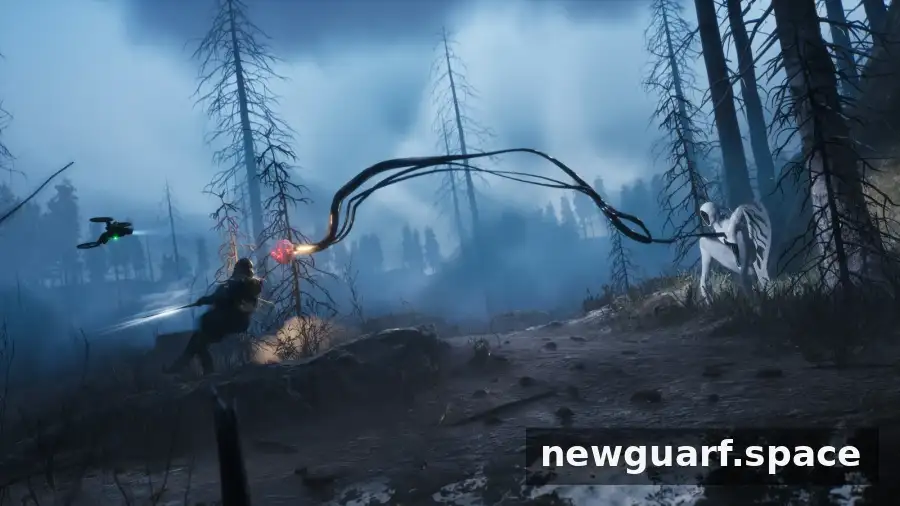
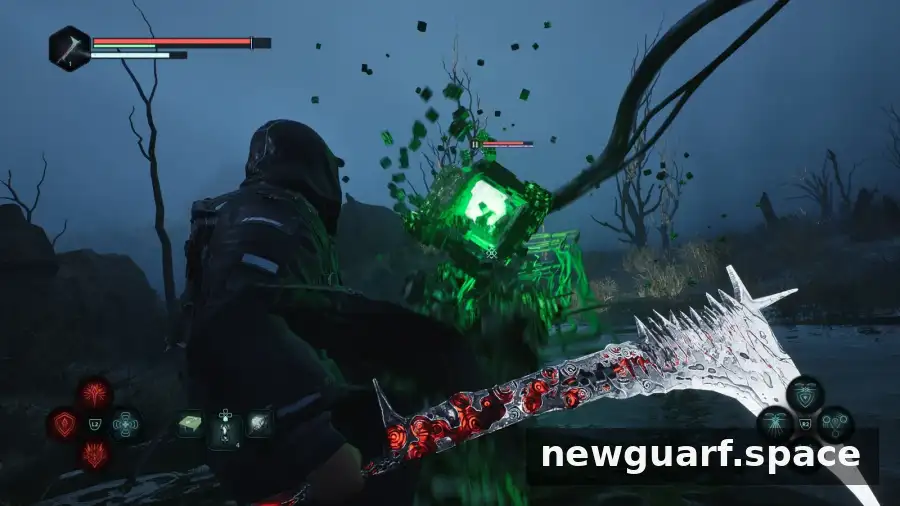
Enemies include pale humanoid beings with openings where faces or torsos might be, as well as strange energy forms that emerge during some encounters. Fights often begin against a single foe, but facing two or three at once makes combat more challenging. Rémi’s drone can distract selected enemies, helping players separate a target from a group or create an opening to flank.
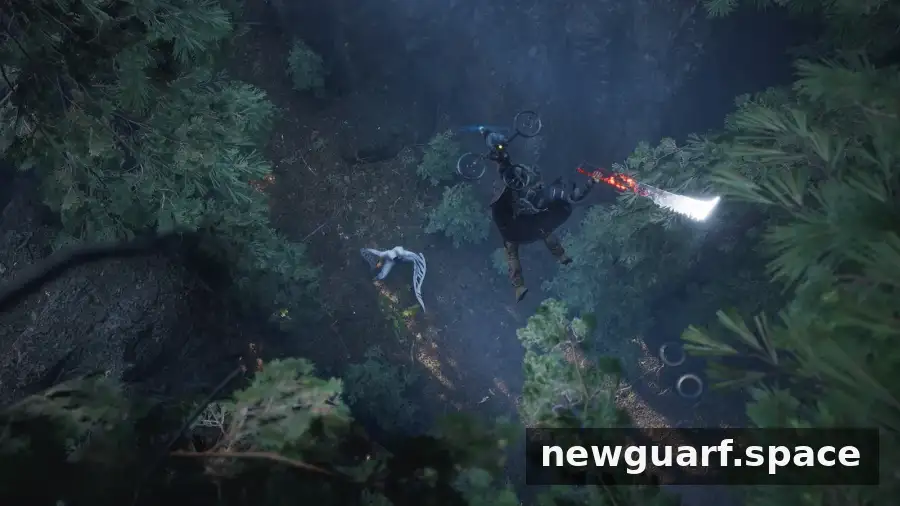
The drone also has practical uses outside combat: it can illuminate dark spaces and scan environmental details, including mysterious wall symbols. Using it when a clue is difficult to read may help connect exploration with the investigation system.
A focused adventure that rewards attention
Hell is Us brings together dungeon exploration, investigations, environmental puzzles, and third-person melee combat. Its less-guided structure aims to make discoveries feel earned, while the investigation charts provide a place to organize clues. In the preview, the lack of map markers did not make it difficult to understand where to go; careful environmental design and gathered information helped keep the experience approachable.
The main story is expected to take roughly 20 hours, while thorough players may spend around 40 hours overall. That estimate makes the game a substantial adventure for those who want to explore beyond the central path. Players who enjoy solving mysteries should take time to question characters, review investigation notes, and revisit places when new clues emerge.
After five years of development, Belletête hopes the game will leave players thinking about its world after each session. Whether its mysteries, puzzles, and combat come together successfully will ultimately depend on the finished experience and players’ responses.
Hell is Us is scheduled to launch on September 4 for PlayStation 5, Xbox Series X/S, and PC. The game may suit players looking for an adventure that values observation and investigation as much as combat. In short, Hell is Us asks players to earn their answers by exploring carefully and following the evidence.