 admin

Ascenders: Beyond the Peak combines mountain climbing with turn-based tactics, party building, roguelike progression, and Lovecraftian horror. Instead of treating a climb as a test of movement alone, the game puts a team of climbers on fictional mountains where every decision can affect the group’s position and safety.
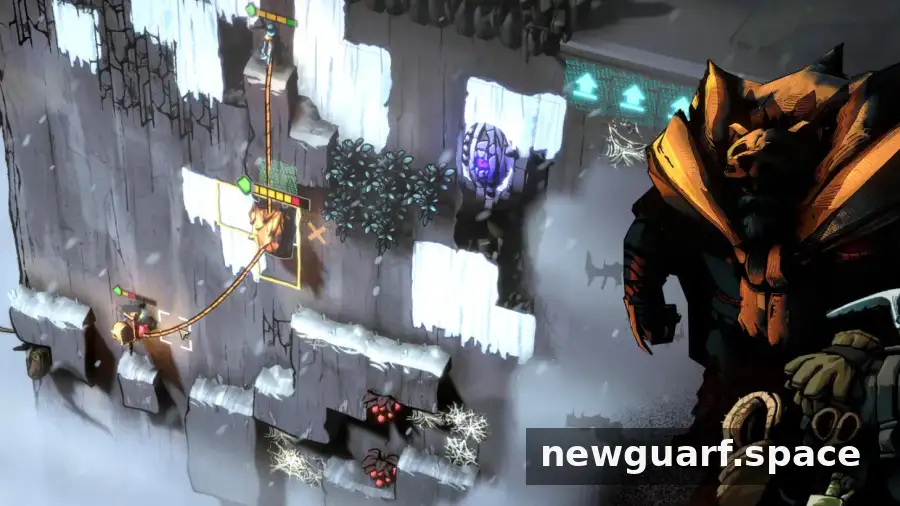
What is Ascenders: Beyond the Peak?
Players lead a party working for the Ascenders Agency. Their assignments come from a wealthy benefactor who wants the team to reach ancient treasures hidden on remote peaks. The expedition takes a darker turn as the climbers uncover unsettling secrets connected to the civilizations that once lived there.
The mix of exploration and horror gives the climbing premise a different tone from a straightforward mountaineering game. The team is not simply heading toward a summit: the environment and its history are part of the challenge. For players, that means approaching each ascent with attention to both the route and the party’s capabilities.
How the climbing and party systems work
A rope with realistic physics connects the climbers. Because the characters are tethered, their movements are linked rather than entirely independent. Consider how the whole group may be affected before committing to a move, especially when navigating difficult terrain. The rope also makes the party’s positioning an important part of the climb.
Each climber has positive and negative traits and belongs to one of nine classes, each with distinct abilities. The class examples point to several different ways of handling obstacles:
- Highlander: Can shove enemies off a cliff, offering a direct way to deal with threats near dangerous edges.
- Sapper: Uses explosives to reshape terrain, making the surrounding landscape part of the tactical problem.
- Scout: Can reposition the party with a grappling hook, providing a way to change the group’s placement.
When assembling a team, look beyond class names and consider how abilities might complement one another. Traits also matter: a climber’s strengths and drawbacks can shape how useful they are in a particular situation. Since the source material does not specify every class or trait, avoid assuming that one fixed party setup is best for every expedition.
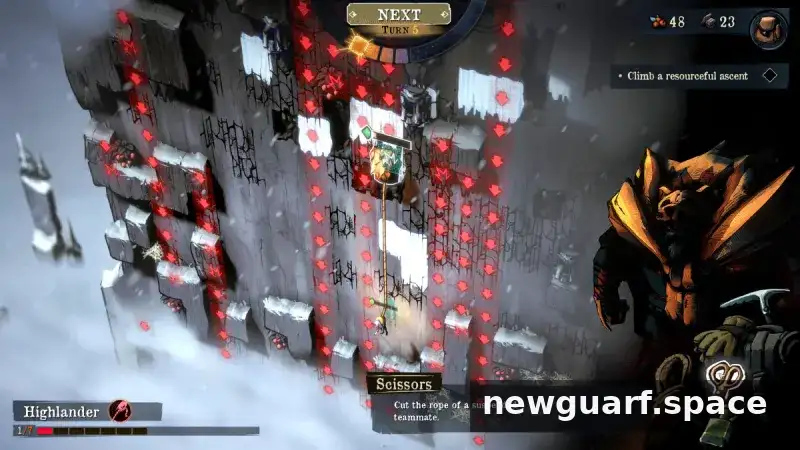
Why the turn-based format matters
Turn-based gameplay creates room to think through decisions rather than relying only on quick reactions. The party’s rope connection, class abilities, and the terrain all give players factors to weigh. A practical approach is to check where each climber is positioned and identify which character’s ability could help before making a move.
The game also uses roguelike progression. While the exact progression details are not provided here, this structure suggests that adapting between attempts is part of the experience. Treat setbacks as a chance to reconsider party roles and tactics instead of expecting every route to be solved in the same way.
Is Ascenders: Beyond the Peak worth watching?
Ascenders: Beyond the Peak may appeal to players who enjoy tactical party management, unusual climbing mechanics, and horror-themed exploration. Its combination of a physically connected team and distinct class abilities gives the ascent a strategic dimension, while the ancient secrets add a darker narrative hook. As an Early Access game, its features and balance may change during development, so check the current game listing for the latest details.
Conclusion
Ascenders: Beyond the Peak stands out by bringing together turn-based decisions, a shared rope, specialized climbers, and Lovecraftian horror. To get the most from its premise, pay attention to team positioning, weigh character traits alongside class abilities, and adapt your approach to the terrain. These systems make the game’s central climb as much a party-planning challenge as a journey toward the summit.
